The ComplyIT365 platform: one data model for IT operations and compliance
Most organisations run IT operations in one tool and compliance in another, then spend weeks before every audit reconciling the two. ComplyIT365 runs both on the same records: when your team resolves an incident, approves a change or reviews a vendor, that action is stored once and becomes traceable evidence for the controls it supports.
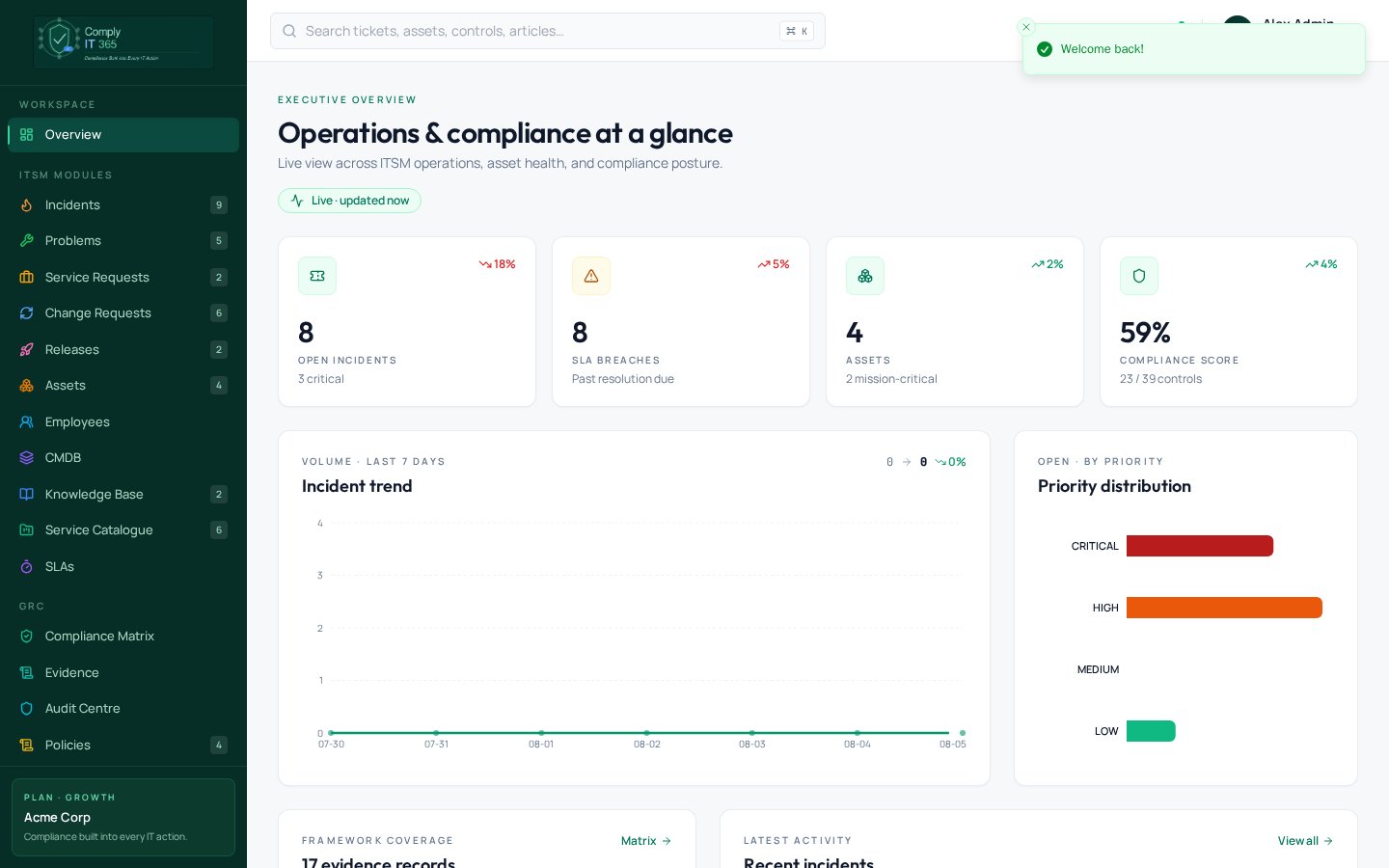
Four suites, one platform
ITSM365
Service desk workflows for incidents, service requests, problems, changes and releases, with SLA tracking and a knowledge base.
ITSM365 service managementGRC & Compliance
A module-by-framework compliance matrix, control ownership, evidence collection, policies and a risk register.
GRC and compliance managementVendor365
Third-party risk management with risk tiers, standard questionnaires, a secure vendor response portal and a hash-chained evidence ledger.
Vendor365 third-party riskAsset Management
An asset register and CMDB with ownership, assignments, relationships, bulk import and audit campaigns.
IT asset management and CMDBWhat connects the suites
Control-linked records
Tickets, changes, assets and vendor reviews can be linked to controls, so the compliance matrix reflects real operational activity.
Shared audit trail
Create, update and approval actions are written to a platform audit trail that auditors can review in the Audit Centre.
Role-based access
Separate roles for IT managers, agents, requesters, compliance, security, vendor managers and auditors, each scoped to their work.
Multi-tenant workspaces
Each organisation works in its own workspace with its own users, teams, data and configuration.
Who uses ComplyIT365
IT analysts work their queues and SLAs. GRC leads track control coverage across frameworks. Vendor managers run third-party reviews. Auditors get read-only access to controls and the evidence behind them.